 DVD
DVD  Blu-ray
  4K UHD
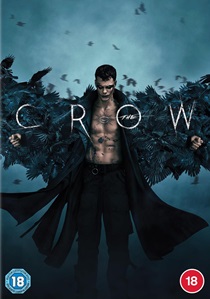
 In the revenge/action-thriller The Crow, Bill Skarsgård takes on the iconic titular role in a modern reimagination of the original graphic novel by James O'Barr.
Soulmates Eric (Skarsgård) and Shelly (FKA twigs) are brutally murdered when the demons of her dark past catch up with them. Given the chance to save his true love by sacrificing himself, Eric sets out for merciless revenge on their killers, traversing the worlds of the living and the dead to put things right.
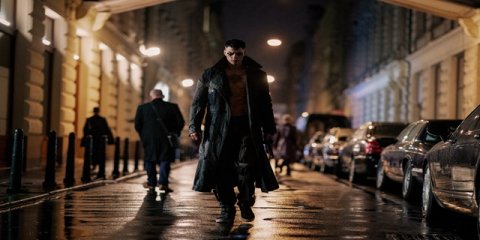
Following the unique vision of director Rupert Sanders, the film navigates the complexities of love, loss, and grief within the framework of a no-holds-barred story of action and revenge. The Crow's look is inspired by the graphic novel's haunting imagery - and encompasses the casting of Skarsgård as a totally reimagined Eric, with a hardened, gothic aesthetic. The characters are modern, dynamic, have varied artistic interests, and inhabit a contemporary society with intriguingly retro designs.
Light
For director Rupert Sanders, the love story between the central characters, Eric and Shelly, is the film's beating heart. "I wanted to invest audiences in their love story, and to have them understand what Eric will do when that love is taken from him," he says. "So, The Crow is two movies in one: an action-thriller story of revenge, and a romance."
Indeed, the tragedy, loss, and grief of Eric and Shelly's romance drives the film. As producer Molly Hassell notes, "During the film's development, one of the most pressing considerations was the thought of what we - or someone - would give to have that last moment with the person we loved deeply and lost tragically. To bring to screen the complex feeling of unexpected loss and to honor the complicated landscape that comes in the wake of such loss".
"Once we brought Rupert aboard, we decided to make something new and imaginative that would touch upon those feelings to which everyone can relate - within a big action-thriller," Hassell continues. "The Crow hits on a new zeitgeist, and a new way of looking at the world, grief, and ultimately, at healing."
Producer Victor Hadida chimes in, "Rupert brought an authenticity from the original source material and a vision that was totally reimagined for a new generation unlike any other ideas we had seen. His version of this dark anti-hero who you could still see humanity within at their darkest hour, and a sense of such anger and frustration reflected throughout the film was tantalizing." William Schneider, who co-wrote the screenplay with Zach Baylin, says he "fell in love with Rupert's completely new take on this world. The way he took a tale of revenge and from it built an unforgettable love story was so inventive, imaginative, and challenging. I loved getting into that element."
Co-writer Zach Baylin says, "I was drawn to working on The Crow for a number of reasons. One - I'm a huge admirer of Rupert's work and I knew he would make something striking and visionary and moving. Two - I had an affinity for the heartbreak and outsider perspective of the original graphic novel and wanted to honor that tragic love story."
Bill Skarsgård adds that The Crow is very much a film for today's audiences. "That's what really got me excited about it," he explains. "This film's Eric and Shelly are completely contemporary; they're two outsiders to whom anyone can relate."
Sanders calls the couple "two kinds of broken and lost souls who find each other in a rehab facility. They come from different worlds; there's a kind of uptown girl / downtown boy feel about them. Eric is lost and silent. There's something beautifully damaged about him. Yet, he's a romantic and can express himself emotionally in a way we don't typically see in heroes or anti-heroes."
Eric's body is covered in tattoos, which tell others to keep away from him. "They're a kind of shell," says Skarsgård. "Eric is tormented, raw, and vulnerable. But there's another side to him; he's also gentle and hurting. Eric has grown up in a destructive household and has been living on the streets. He uses drugs and other vices to survive, with only Eric's creative work in music and drawing giving him purpose." "Then Eric meets Shelly, which transforms him," the actor continues. "I imagine that can happen with addicts or people close to rock bottom; they meet someone and project a kind of salvation on them. I think Eric feels that Shelly is some kind of angel who's been sent to save him. Shelly becomes Eric's savior as well as his lover. She rekindles a fire and purpose in Eric. When she's taken away from him, it's all about the lengths that Eric will go to get her back."
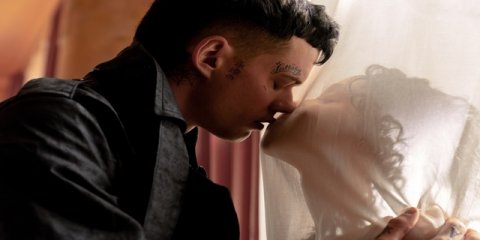
Sanders says that Shelly's arrival in Eric's life is completely unexpected, but "there's something magical about their draw to one another. She teaches him how to feel and love again. When that's taken away from Eric, it's incredibly painful."
There's a supernatural loophole that could bring Shelly back - but at the ultimate cost to Eric. First, he must become a vengeance seeking, unstoppable force. Eric's odyssey of retribution is marked by relentless violence and death, but also points to another of the film's key themes: self-sacrifice. Says Sanders: "Eric's great loss leads to a journey of nihilism and destruction, but it's all to bring Shelly back. He will become a monster and sacrifice his eternal life for her mortal life."
FKA twigs, a British genre-bending singer, songwriter, and actor, takes on the role of Shelly. Shelly, too, is broken. She had been taken under the wing of a wealthy man whom she saw as a benefactor, but who ultimately forced her to commit an unspeakable act. To escape his further persecution, Shelly flees to the rehab facility where she eventually meets Eric. Their bond is immediate and powerful. "Eric offers Shelly comfort, safety, and an unconditional love that she's not experienced before," twigs notes. "Shelly, in turn, offers Eric a sense of expression, art, and knowledge. She's always talking about music and poetry and has lived in beautiful places. Shelly provides Eric with a kind of home to explore and express himself and be the most authentic version of himself. They're a perfect fit of jigsaw puzzle pieces. So, when she's ripped away from him, Eric has no choice but to go and find her, no matter what it costs him."
In casting the role of Eric, Sanders and Hassell were looking for an actor who could convey authenticity, as well as a critical mix of inner fragility and external violence and rage that fill Eric in his journey to save Shelly. They found all those colliding traits in Bill Skarsgård.
"Bill, after working in the horror genre [as Pennywise the Clown in the blockbuster film adaptations of Stephen King's It], was ready to step out from those veils of makeup and become himself," Sanders explains. "He's an incredibly emotional actor, with huge eyes that convey feelings of longing, pain, boyish wonder, and love. But when they harden, those eyes become terrifying." The dynamic between Eric and Shelly - and Skarsgård and twigs - had to be magical. "There was indeed something chemical going on between Bill and twigs that was a joy to watch and capture on film," Sanders tells us. "Without that chemistry, we'd wonder why Eric would go on this war path to bring back Shelly. Eric had to care so deeply about Shelly, and she had to make such an impression on him - and the audience - which she does."
"The Crow's DNA has alway been a deeply romantic helix of horror, music, and violent urban myth and Bill and Twigs are the perfect collaborators to bring that to life," says Baylin.
Beyond the necessary chemistry, Sanders was looking for an actor who could embody Shelly's magical and unique qualities, "so the audience would feel the vacuum from her disappearance," he continues. "There was something about twigs that carried a once-in-a-generation feeling. She really turns Shelly into a formidable and iconic figure."
Baylin continues that, "Twigs is such a transcendent performer with a mix of balletic grace and punk outrage that perfectly fit our Crow's world."
FKA twigs felt a strong and immediate connection to the character. "I wanted to play Shelly because she felt like a magnified version of myself. Obviously, we're not the same, but it felt like Shelly was one side of me that could be 'blown up' into the entire character."
"There's something really light and child-like about Shelly, even though she's been enveloped in darkness," twigs continues. "I feel that in myself, as well. I liked that Eric and Shelly have such a deep love and connection that feels different from those we've seen before. They have their own vibe."
Darkness
Shelly's former benefactor, Vincent, a titan of industry who mentors and then discards bright young talents, in horrible ways, embodies darkness and evil. He's part of the untouchable elite and 'old money,' who has made a Faustian bargain to ensure his immortality.
"Vincent accumulates knowledge and talent, and possesses endless magnetism and charm," says Sanders.
"Vincent can exert pressure and violence on others and remain unblemished by it," says noted character actor Danny Huston, who takes on the role. "There's something interesting about the relationship between Vincent and Shelly, his former mentee. She was a concert pianist and, as a young woman, began playing piano for him. Soon, that relationship became quite dark, in a supernatural way." Huston was in sync with Sanders's vision for the character. "We didn't want Vincent to be a devil or demon," the actor points out. "Instead, he's a wealthy industrialist and pragmatist who made an unholy deal in which he delivers the souls of young innocents to avoid going to hell."
Huston says Vincent thinks of his young charges as "handpicked flowers. They're all stunning, beautiful, and talented women," he continues. "But eventually Vincent tires of them," causing their deaths - or worse.
After Vincent exerts that power on Shelly, to horrific results, she flees to the rehab facility. But Vincent could never have considered the force that had fallen in love with her: Eric ... The Crow. That in turn leads to a final battle from which only one will emerge.
For Sanders, Huston was ideal to take on the powerful and dark magnate. "Danny is an incredible actor with the ability to charm in the darkest of places," he notes. "The devil is a charmer; he seduces with a silk tongue, and Danny really conveys the feeling that Vincent has lived for many centuries. Danny is terrifying when playing Vincent's dark turns."
Sanders also praises actor Laura Birn, who portrays Vincent's aide, Marion, who's a principal player in carrying out his shocking acts. "Like Danny, Marion has the ability to be soft and tender, and then quite terrifying," he attests. "Laura inhabits the character's tragedy and fearsome strength, which makes her unpredictable and amazing to watch."
Sanders sees the dynamic between Marion and Vincent as being charged with darkness, and "perhaps mythologically and romantically linked. There's a lot unsaid between them," he continues, "but her main duty involves bringing Eric to Vincent."
The Guide
Eric's guide in his odyssey to bring Shelly back to him is Kronos, a character who exists between heaven and hell. "Kronos holds an unpaid debt of a soul, and that soul is Vincent's," Sanders comments. Multiple César Award winner Sami Bouajila portrays Kronos, who shapes much of Eric's efforts to rescue Shelly. "I appreciated that Kronos is a timeless figure," Bouajila notes. "He's both Machiavellian and benevolent. Kronos is outside everything, and in his world, anything goes. Yet, Kronos still has something to pass on to Eric. I find that quite beautiful. The paradox of this transmission is that Kronos must do that in order to free himself from the constraints of his world, which exists between that of the living and the dead."
Sanders says Bouajila brings a necessary "sense of the otherworldly to his performance and has a resonant and florid speaking voice. That, along with his accent, brings a kind of truthfulness to Kronos, which felt god-like."
The crows that deliver Eric to Kronos are like sentinels that move between the worlds of the living and the dead. "They are Kronos's messengers," states Sanders, "who bring the dead, including Eric, to Kronos."
The Making Of
Sanders's startling vision for the look of the film hits us from the opening frames, during the title sequence, in which a figure - revealed to be Eric - is seen writhing and undulating in a black liquid.
"I wanted to make a film that was sophisticated, visceral, and mind-blowing from the start," says Sanders. In a near freezing room, the filmmakers filled a large animal feed tank with a black food-thickening agent, in which Skarsgård was filmed writhing, splashing, punching, and spitting - all captured at an ultra-high 600 frames per second with a state-of-the-art Phantom camera. The high frame rate facilitated a slow-motion unveiling of the unsettling and striking actions. "We designed it to be an allegory of a fight against the darkness," Sanders adds.
When Sanders came aboard The Crow, he looked at some of his favorite films from the '80s and '90s, like Diva and Subway, which, he says, "have this great aesthetic that feels very modern, yet timeless and otherworldly."
"I wanted The Crow to have a grounded aesthetic," Sanders continues. "Even the supernatural elements had to feel authentic. I didn't want anything to feel too fantastical."
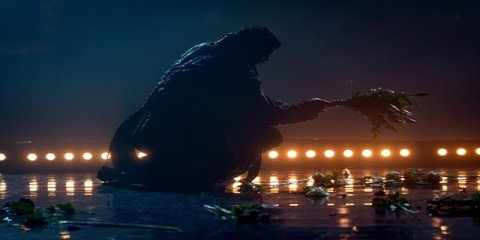
The film moves between the urban, graffitied street culture and nightclubs of Eric's life, to the more sophisticated '90s-inspired apartments of Shelly and her mother, and the heaven-and-hell vibe of the massive, flooded, and abandoned railyard that's home to Kronos.
Then there's the cultured world of Vincent and his entourage. In the film's third act, there's a thrilling collision of these spheres in an opera house, where, says Sanders, "We relish in the majesty of the opera being performed while experiencing the violence and actions of Eric, who kills an endless stream of Vincent's people to get Shelly back. It's an opera within a movie, but it's really about high culture smashing into low culture."
"There's a ballet to the violence," Sanders adds. "The action is outlandish, brutal, and bloody, and it's a little bit pushed. With the action cut with the opera, and set to the opera's score, the violence becomes its own ballet."
It's a rousing sequence that was, says Hassell, more than a little complicated to capture. "There's a lot going on there," she says in an understatement. "We were writing music to match the choreography of the fighting as Eric tears his way through Vincent's operatives, to what was happening onstage."
The battle is the culmination of Eric's physical and emotional journey as The Crow. "At that point Eric has sacrificed everything for Shelly, even knowing that no matter how it all turned out, he couldn't be with her at journey's end," Skarsgård points out. "For Eric, the battle at the opera becomes a way of clearing a building, fueled by anger, hate, and nihilism."
Principal photography of The Crow took place in Prague, Czech Republic. In addition to the volcanic opera house sequence, notable sets created by production designer Robin Brown and his team included Kronos's in-between world of the living and dead, which was inspired by Andrei Tarkovsky's landmark 1979 film Stalker.
The filmmakers, looking to fulfill Sanders's mandate of authenticity, even within a fantastical environment, found an abandoned rail yard, then flooded it and extended its scope via visual effects. That underworld, states Schneider, is "pure Rupert Sanders, with his beautiful mind completely unleashed. Most people, when considering the levels of perdition, think of something that's drab and terrifying. Rupert and Robin went the other way, creating this incredibly beautiful environment that exists between heaven and hell."
Another impressive set was the rehab center where Eric and Shelly begin their fateful romance. The work of costume designers Kurt and Bart was similarly essential to the look of The Crow. As Sanders, who collaborated with the duo on the film Ghost in the Shell and on the series Foundation, tells it, "Kurt and Bart grew up as club kids in New York City, so we experimented with wild costumes from their late teens and onward. They're very DIY, have incredible imagination, and are enmeshed in street culture."
Kurt - notes that a key part of Eric's "costume world" is his crow coat, which he dons ahead of his unstoppable quest to free Shelly. Regarding the coat's origins in the story, he says, "After Eric and Shelly flee the rehab facility, they land in the empty flat of a rich relation. Playing " dress-up" in the couture packed closet, they find an edgy, avant-garde designer coat which Eric puts on. When Shelly pulls it off his shoulders, it lands inside out on the bedroom floor. After Shelly's death, Eric returns to the apartment where they had fallen in love, finds the coat on the floor and puts it on ... inside-out."
Bart adds, "The coat is a connection to Shelly, their love and becomes Eric's armor in a way and it sees a lot of action! - His acts of revenge make the coat look even more beautiful.
The costume designers also formed a close working relationship with twigs, traveling with her to London to research Shelly's outfits.
"Twigs has a really strong personal style," says Kurt, "so we had to strip her down to find Shelly's look. Twigs told us she wanted Shelly to be relatable and for the look to be something attainable and achievable for any girl, we thought that was interesting and embraced the idea of making it a look that anybody could dress like Shelly." Although the pieces are a bit elevated, the DIY aesthetic is there.
For key sequences where Shelly is in water, Sanders relayed that he wanted her to have an outfit that floated like a jellyfish. It was made from an old parachute.
"We wanted something that kind of billowed beautifully underwater," Sanders confirms. "twigs also wears amazing, latticework corsets and big platform shoes."
For the overall palette of twigs's costumes, Bart says, "We went for a very desaturated look. Twigs can carry anything well, including strong colors, but we wanted that outfit and palate to be soft, broken and faded. The blossom is dying. There's a bit more darkness, and its beautiful faded and sad"
For the hair and makeup, the filmmakers wanted Eric to have a kind of homemade chop aesthetic, as well as home-grown piercings and tattoos, all of which are central to the character.
"I wanted Eric to come from a place that felt resonant to the street culture I grew up with in the '90s," says Sanders. "Many of the kids I used to go out with would cut homemade mullets and piercings, and people would tattoo their own thighs and hands. Eric has been on that kind of journey and has that kind of piecemeal look. It was about him looking aggressive on the outside, but inside being very vulnerable. It's not a warning of 'I'm dangerous'; it's a warning of 'Keep away; don't talk to me.'"
For the film's score, Sanders enlisted composer and Academy Award® winner Volker Bertelmann (Best Original Score, All Quiet on the Western Front, 2022). In creating a musical theme for Eric/The Crow, Bertelmann sought what he calls an "emotionally rich sound with a nice chord structure. But when you play it raw and then brassy, it expresses the character's rage and darkness."
In addition, he uses low string instruments and contra basses and cellos as a Crow-on-a-mission theme.
For the Eric/Shelly romance, Bertelmann employs a simple piano theme. "We feel the connection between the scenes where they meet one another, from the past, to later, when Eric dreams of Shelly," he suggests.
Sanders had enjoyed Bertelmann's Oscar®-winning work on the recent, All Quiet on the Western Front and his Academy Award®-nominated score for Lion. Moreover, "Volker had a good understanding of what I was trying to do with The Crow's emotional and industrial landscape. With this score, we needed to push the emotion in a way that feels contemporary and compelling."
Loss...
The Crow's theme of loss and grief extended into the lives of the filmmakers.
The sense of real-life loss extended into this film's production. The production of this film was marked by a poignant real-life loss. Edward Pressman, who was a producer on the 1994 picture, as well as on the new one, passed away not long after production wrapped.
"Ed's sensibility, and his understanding of pop culture and the motion picture universe, were very present when we made The Crow," says Sanders. "I was lucky when I got to sit with Ed for lunch and screen some of the film for him. Later, Ed saw the first cut of the film, and wrote me a long, beautiful email about how much he loved it, how he thought it was a worthy successor, and how we retained so much of what he loved about the graphic novel. He was a true advocate for the path were taking on The Crow."
Molly Hassell reminds us that the heart of the film is grief, noting that James O'Barr wrote the graphic novel after his fiancé had passed away in an automobile accident. Moreover, Hassell and fellow producers Victor Hadida and John Jencks had decided to make The Crow in the memory of Victor's late brother, Samuel Hadida, who had been championing the making of film but passed away in 2018. "At the time, we dedicated the making of The Crow to Samuel Hadida who we lost unexpectedly. This loss was very personal to all of us involved in the film - whether as brother, love, or deep friendship - it was the driving force behind the creation of the new film. Much like O'Barrs original work." Victor continues, "bringing it to screen is the biggest tribute I can make to his legacy."
... And Hope
Hassell says these themes will move audiences. "We wanted to make a film to which audiences can relate, and from which they can take something away," she continues. "It's very important to all of us involved in The Crow that audiences leave the cinemas understanding that they're not alone, and that everyone, at some point, experiences grief or death. It's not a solo journey; it's something we can talk about and deal with together."
Victor Hadida says "The aesthetic of the film is an experience in itself. But in a dark theater on the big screen with great music and surround sound, you go on this journey with these characters in a beautiful and stylish setting with impressive scope, and it is so very intimate."
For William Schneider, working on The Crow was an emotional experience. "When I was a kid, the world that James O'Barr created was so important to me, so being a part of this project was incredibly personal. It felt like Rupert Sanders was leading us through the jungle together, uncovering so many unique moments. It was always challenging work, but very rewarding at the end of the day. It felt like we were making something special."
Bill Skarsgård adds that The Crow offers audiences something different. "It's emotional, dark, gritty, romantic, with a lot of edgy action. I hope the movie speaks to everyone, especially those who don't see themselves represented much in films today. Eric and Shelly are outsiders, rebels, and misfits, and this is their story."
Rupert Sanders concludes, "This story has universal themes: everyone has loved and experienced grief. There's also the idea about sacrifice - that there are things worth more than a sense of self. The film asks, what would you do for someone else? It taps back into the true beauty of a love story."
Cast Biographies
Bill Skarsgård (Eric) has amassed an impressive resume of diverse roles and continues to fearlessly evolve his body of work.
Skarsgård will also captivate audiences in Robert Eggers' Nostferatu, distributed by Focus Features and scheduled for a Christmas day premiere. This gothic narrative follows a haunting relationship between a tormented young woman and the chilling vampire consumed by his infatuation, unleashing unfathomable terror in its wake. Also, this year, he led Boy Kills World, a distinctive fantasy film inspired by graphic novels, helmed by director Moritz Mohr which released on April 26th.
Other recent film credits include John Wick: Chapter 4 for Lionsgate, the fourth installment of the popular franchise opposite Keanu Reeves; the horror-thriller, Barbarian; Scott Free Productions' Naked Singularity opposite John Boyega; Antonio Campos adaption of The Devil All The Time opposite Tom Holland and Robert Pattinson, Edson Oda's indie sci-fi drama Nine Days alongside Winston Duke and Zazie Beetz; Sam Levinson's film, Assassination Nation and David Leitch's Atomic Blonde opposite Charlize Theron and James McAvoy.
In 2017, Skarsgård gained widespread recognition for his chilling portrayal as the iconic and terrorizing clown "Pennywise" in the first installment of the IT film series, directed by Andy Muschietti. His eerie performance captivated audiences, earning him praise for his ability to instill terror with his portrayal. In 2019, he reprised his role in the sequel, It: Chapter Two where Skarsgård delved deeper into the complex character of "Pennywise," showcasing his versatility as an actor. Despite the monstrous facade, Skarsgård brought depth and layers to the character, exploring the characters origins and motivations with chilling intensity.
On television, he will be seen reprising his role as "Pennywise" in Welcome To Derry, Max's upcoming IT prequel series with Skarsgård also serving as an executive producer. Most recently he was seen in the Swedish language series, Clark, for Netflix. The biographical drama, directed by Jonas Åkerlund, chronicled the life of notorious Swedish gangster/bank robber Clark Olofsson, who was the originator of the term "Stockholm Syndrome." Skarsgård received rave reviews for his portrayal of Olofsson, with critics lauding this as an "excellent performance" and his interpretation as "simply perfect".
Previously he starred in Hulu's Castle Rock, a psychological drama series from J.J. Abrams and Stephen King, as well as Eli Roth's Netflix/Gaumont hit series Hemlock Grove, where he played Roman Godfrey, the teenage heir to the Godfrey fortune and a seemingly haughty rich kid with a deep dark secret.
Born in Cheltenham, England, Tahliah Debrett Barnett, known by her artist's name FKA Twigs (Shelly), hails from a diverse background. Her English mother and Jamaican father, both artists in their own right, laid the foundation for her artistic journey. Twigs has fast risen to prominence as one of the most celebrated pop artists of her generation.
A multifaceted talent, twigs is a singer-songwriter, professional dancer, actress, and model. Her self-made and unique creativity has earned her countless awards and nominations; she embodies the culture of the last decade-a fusion of music, cinema, art, and fashion. Her persona is art, and her life story is woven into her artistry.
Raised in a small town, twigs attended a private Catholic school on an academic scholarship. From a young age, she immersed herself in opera and ballet lessons, later venturing into music production in youth clubs at the age of 16. At 17, she relocated to London to pursue a career in dance.
A dedicated philanthropist and visual savant, in 2023, she created an original art piece for "The Wild Escape" project with the Art Fund, advocating for youth in the arts. Today, she serves as the ambassador of Sistah Space, a charity supporting survivors of domestic violence of black origin in the UK, helping establish the first safe house for women of black origin.
FKA twigs' music catapulted her to international acclaim, garnering not only awards and prizes but also a global fan base. Her mixtape "Caprisongs," released in 2022, culminated in her receiving the NME's Godlike Genius Award, making her the youngest recipient to date.
Recently, twigs graced the cover of British Vogue and made her solo debut as a dancer with the Martha Graham Company, performing "Satyric Festival Song" at the company's 98th season Gala in New York. Additionally, she is set to star alongside Bill Skarsgård in a modern adaptation of The Crow, directed by Rupert Sanders, scheduled for release in August. And last but not least, on April 25th in London, FKA twigs has received the prestigious award for outstanding contribution to UK Music by the Music Producers Guild.
Award-winning actor, writer and director, Danny Huston (Vincent Roeg) is known for his versatility and dramatic screen presence. Most recognized for his roles in films like Martin Scorsese's The Aviator, Alfonso Cuaron's Children of Men and Alejandro González Iñárritu's 21 Grams, Huston has worked with some of the finest film directors of his generation.
Huston got his start directing Mr. North with Robert Mitchum, Anthony Edwards and his sister Anjelica Huston. He went on to give his breakthrough acting performance in the independent film Ivansxtc for which he was nominated for Best Male Performance at the 2003 Independent Spirit Awards. Since then his film acting work has included: X-Men Origins: Wolverine, Ridley Scott's Robin Hood, Hitchcock with Anthony Hopkins, Wrath of the Titans with Liam Neeson, The Constant Gardener with Rachel Weisz and Ralph Fiennes, Sofia Coppola's Marie Antoinette, John Sayles's Silver City, The Libertador with Edgar Ramírez, The Congress with Harvey Keitel, John Hillcoat's The Proposition with Guy Pearce, Birth opposite Nicole Kidman, 30 Days of Night with Josh Hartnett, Peter Berg's The Kingdom, and many more.
In 2013, his critically acclaimed role of Ben the Butcher in Magic City (Starz!), earned him a Golden Globe® nomination for Best Performance by an Actor in a Supporting Role in a Series, Mini-Series or Motion Picture Made for Television. His other television acting work includes the hit television series Masters of Sex (Showtime), a recurring role in the hugely popular American Horror Story anthology (FX), and performances in You Don't Know Jack with Al Pacino and John Adams (HBO/Playtone). Huston starred in two seasons as 'Dan Jenkins' on the Taylor Sheridan and Paramount TV series Yellowstone: the number one series on television. Simultaneously, Huston was also seen in the critically acclaimed series Succession for HBO.
In 2017, Huston portrayed 'Robert Evans' in the stage adaptation of The Kid Stays in the Picture directed by Simon McBurney, for The Royal Court Theatre in London. Huston went on to appear in the global box office hit Wonder Woman, directed by Patty Jenkins.
Additional feature credits include, Paranoid for Netflix and ITV Studios, Marc Forster's All I See Is You, Frankenstein directed by Bernard Rose, Pressure, directed by Ron Scalpello; and Tim Burton's Big Eyes. Huston also directed himself in The Last Photograph which screened at The Edinburgh Film Festival and the Mill Valley Film Festival. Huston could be seen co-starring in Angel Has Fallen alongside Morgan Freeman and Gerard Butler, as well as the IM Global feature Richard Says Goodbye with Johnny Depp for writer/director Wayne Roberts. He also starred in the comedy feature Game Night with Jason Bateman and Rachel McAdams.
In 2021 and 2022, Huston went on to film Across the River and Into the Trees with Liev Schreiber, Tempête, directed by Christian Duguay opposite Melanie Laurent, Marlowe opposite Liam Neeson and directed by Neil Jordan, Consecration opposite Jena Malone, the Italian film Te l'avevo detto (I Told You So) with Valeria Golino, and The Crow, directed by Rupert Sanders.
Most recently, Huston stars in Kevin Costner's Horizon: An American Saga which has hit theaters this summer and Viggo Mortensen's directorial debut The Dead Don't Hurt, which premiered at the Toronto Film Festival in 2023. Huston can also be found in Paramount's upcoming Naked Gun reboot alongside Liam Neeson, Pamela Anderson, Paul Walter Hauser, and Kevin Durand.
In 1991, Sami Bouajila (Kronos) made his film debut playing a suburban teenager, the lead role in Philippe Galland's film, La Thune. He then starred in Anne Fontaine's first film Les Histoires d'amour finissent mal... en général, and was propelled to the forefront of the stage thanks to his role in Bye-Bye by Karim Dridi in 1995.
In the 2000s, he landed more and more notorious roles, including in the feature films Drôle de Félix by Olivier Ducastel, for which he received the award for best young actor at the Cabourg Film Festival.
In 2006, after notable collaborations with Abdellatif Kechiche in La Faute à Voltaire and Michel Blanc in Embrassez qui vous voudrez, the success of the war film Indigènes by Rachid Bouchareb brought him to the Cannes Film Festival where he and the rest of the cast won the award for best ensemble.
The career of Sami Bouajila kept growing strong, he has since received in 2008 the César Award for best supporting actor for Witnesses by André Techiné, before taking a part of films like Outlaw, directed by Rachid Bouchareb (2010), Omar Killed meme, directed by Roschdy Zem (2011), Braqueurs, directed by Julien Leclercq (2016), or "Paradise Beach" Xavier Durrigner (2018).
In 2021, Sami Bouajila shines in the drama A Son, by Mehdi Barsoui, for which he receives the Best Actor Award in the Orizzonti section, the Lumière Award for Best Actor and then the César for Best Actor.
In 2021, 5 years after the release of Braqueurs, Sami Bouajila returns with Braqueurs the series on Netflix. The series is an all-around success and returned for a second season in 2023.