DVD
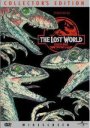
DVD Billionaire John Hammond invites palaeontologists Dr. Alan Grant and Ellie Sattler and mathematician Ian Malcolm to inspect his brand new island amusement park, populated with living dinosaurs brought back to life 65 million years after their extinction.
Details
On a remote island off the west coast of Costa Rica, billionaire John Hammond and his team of scientists have perfected a cloning technique capable of recreating the long-extinct dinosaurs. By recovering dinosaur DNA from the blood of prehistoric mosquitoes preserved in amber, they have succeeded in bringing creatures unseen for millions of years back to life.
Hammond has big plans for his genetically engineered dinosaurs in the form of a spectacular theme park called Jurassic Park. Before opening the attraction to the public, however, he visits palaeontologist Dr. Alan Grant and palaeobotanist Dr. Ellie Sattler during one of their digs and invites the pair to his island in an attempt to gain their approval and reassure his increasingly nervous investors.
Together with mathematician Dr. Ian Malcolm and Hammond's two eager grandchildren, the group sets off on what should be a relaxing tour of the island. However, when a tropical storm hits and the park's security systems are sabotaged, the dinosaurs are able to escape from their enclosures. With the electric fences disabled and some decidedly unfriendly inhabitants now roaming freely around the park, the visitors suddenly find themselves much further down the food chain.
Picture & Sound
The picture is bright and colourful, although occasionally a little washed out. The bit-rate remains high throughout and there are no obvious signs of outlining or digital artifacting. There are a few occasions where picture noise becomes noticeable, but these are sufficiently infrequent that they do little to detract from the overall presentation. Both editions offer a generally impressive transfer, with the lush vegetation of the island and, of course, the dinosaurs themselves benefiting from a good level of detail.
It is in the sound department where the Region One DTS edition really comes into its own. The DTS soundtrack is superb, with some excellent channel separation and suitably floor-thumping low frequency effects. The Dolby Digital soundtrack on the Region Two edition is certainly no disappointment either and still delivers plenty of surround activity and bass, but it lacks that final degree of separation and impact offered by its DTS counterpart.
The DTS soundtrack makes particularly good use of the rear channels, with plentiful ambient effects helping to place the viewer firmly within the park. The scene in which the herd of Gallimimus charges past Grant and the children is particularly effective as the dinosaurs thunder across the soundstage. Then, of course, there is the Tyrannosaurus rex. Its footsteps provide the soundtrack with some enormous low frequency effects, making the famous ripples in the cup of water an excellent warning of what is about to arrive.
Overall
Jurassic Park was truly a groundbreaking event. Not only was it a phenomenal worldwide box-office success, it also changed both the possibilities and expectations surrounding computer-generated imagery. Films such as Terminator 2 had already demonstrated what CGI could achieve, but Jurassic Park took the technology another enormous step forward by convincingly placing living, breathing dinosaurs alongside its human cast.
The original plan was to use go-motion animation for many of the dinosaur sequences, while a renowned effects team headed by Stan Winston was enlisted to create the full-size creatures, including the enormous Tyrannosaurus rex. The possibilities changed dramatically once Spielberg saw what ILM could produce with computer-generated dinosaurs and, as they say, the rest is history. Unfortunately, the success inevitably resulted in a sequel which, despite bringing back the impressive dinosaurs in greater numbers, proved rather less satisfying.
Together with the stupendous special effects and that certain flair only Steven Spielberg can bring to this type of film, Jurassic Park deserves its place as one of the landmark films of the 1990s. More importantly, beneath all the technical wizardry is a hugely entertaining adventure that still knows when to slow down and allow its dinosaurs to inspire awe rather than simply using them as monsters. It is certainly a film worth owning, but which of these two editions should you choose?
If extras are not your main concern, you own a multi-region DVD player and have a DTS decoder, then the US Region One DTS edition gets my recommendation. The improvement offered by the DTS soundtrack is enough to make sacrificing some of the additional material worthwhile. However, those without a multi-region player or DTS decoder should have no hesitation in buying the Region Two edition. Its Dolby Digital soundtrack remains extremely impressive, it contains the more comprehensive selection of extras and, as an added bonus, has some rather nice animated menus.
Special features
Region One (DTS) Edition
- Direct Hotlink to the Set of Jurassic Park III
- Documentary "The Making of Jurassic Park"
- Theatrical Trailers
- Dinosaur Encyclopaedia
- Production Notes
- Cast and Filmmakers Notes
- DVD-ROM Enhanced
Region Two (Dolby) Edition
- Documentary "The Making of Jurassic Park"
- Official Jurassic Park and Jurassic Park III Web links
- Early Pre-production Meetings
- Story boards
- Location Scouting Animatics : Raptors in the Kitchen
- Foley Artist Production Photographs, Design Sketches and Concept Paintings
- Theatrical Trailers
- Dinosaur Encyclopaedia
- Production Notes
- Cast and Filmmakers Notes
- Animated Dinosaur Menus